
Looking and Not Looking
Journey to the End of the NightThis flow tracks sight, blindness, and observation as ways characters confront or evade the realities they cannot comfortably accept.
increasing Bearing strength in each event
 decreasing
Bearing strength in each eventdecreasingThe Imaginative Spectator
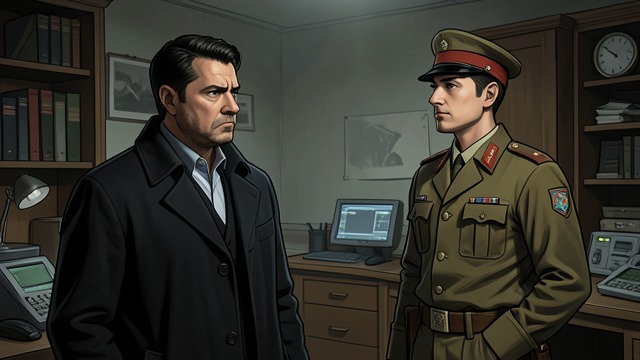
The Imaginative Spectator
Seeing death ahead
Bardamu’s imagination makes bullets and death painfully immediate, while the colonel appears unable to picture his own end. Their different ways of seeing divide fear from military confidence.
Imagination as burden
The more vividly Bardamu sees the consequences, the less capable he is of participating in heroic action. Awareness does not save him; it makes survival feel more urgent.
Robinson’s Blindness
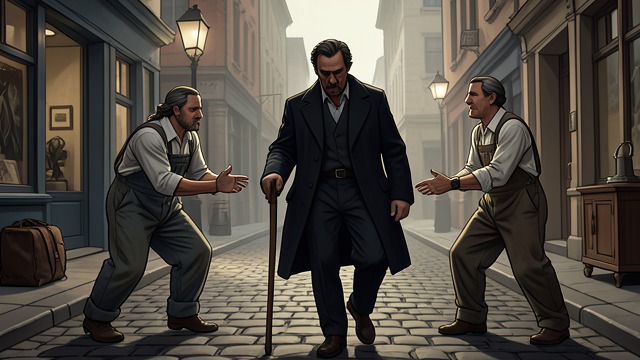
Robinson’s Blindness
A damaged view
The explosion leaves Robinson unable to see, and he depends on Bardamu and the Henrouilles to navigate ordinary life. His blindness becomes both physical injury and enforced dependence.
Darkness made intimate
Robinson discovers that the world continues beyond his reach. His attempts to imagine what remains cannot replace direct sight or restore his former independence.
Sight and Disappointment
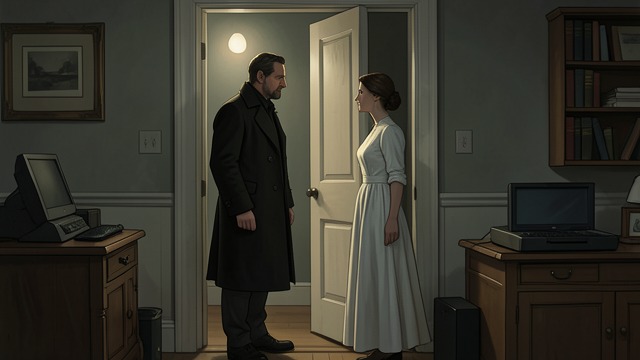
Sight and Disappointment
Recovery without renewal
Robinson’s vision improves, but seeing again does not make him content with the life around him. The restored capacity exposes the same resentments more clearly.
No promised transformation
Madelon hopes recovery will lead to marriage and stability. Robinson’s renewed sight instead supports his wish to leave.
The Carnival Photograph
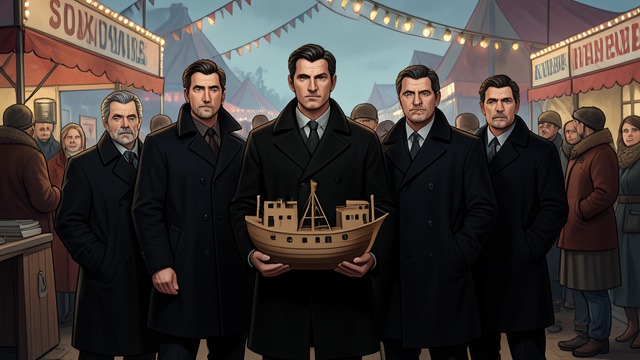
The Carnival Photograph
Posed identities
Bardamu and his companions pose on a cardboard ship for a carnival photograph. The staged image asks them to look forward together despite their fractured relationships.
A surface record
The photograph captures appearance rather than reconciliation. Their stillness before the camera contrasts with the accusations and estrangement surrounding them.
The Unseen Death
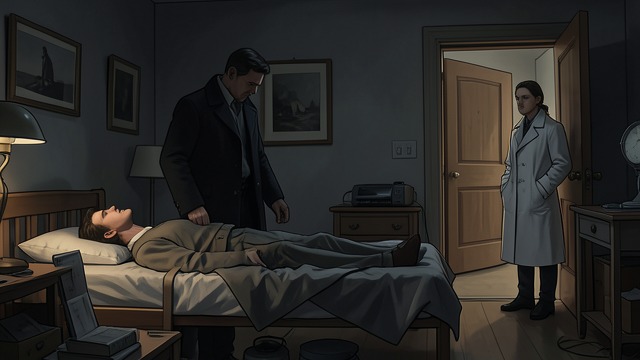
The Unseen Death
Watching a friend die
Bardamu observes Robinson’s suffering but cannot find the emotional or practical resources to ease it. He recognizes the limits of his own attention and compassion.
No final revelation
Robinson’s death does not deliver a clear truth about life. It leaves Bardamu with an image of human weakness that he cannot turn into certainty.
During Bardamu’s first encounter with battlefield fire
After the explosion in Rancy
During Robinson’s recovery in Toulouse
During the attempted reconciliation at the carnival
After Robinson is shot
